What Google Saw Inside a Milwaukee Auto Recycler
What Google Saw Inside a Milwaukee Auto Recycler
September 6, 2026 | 5 min read
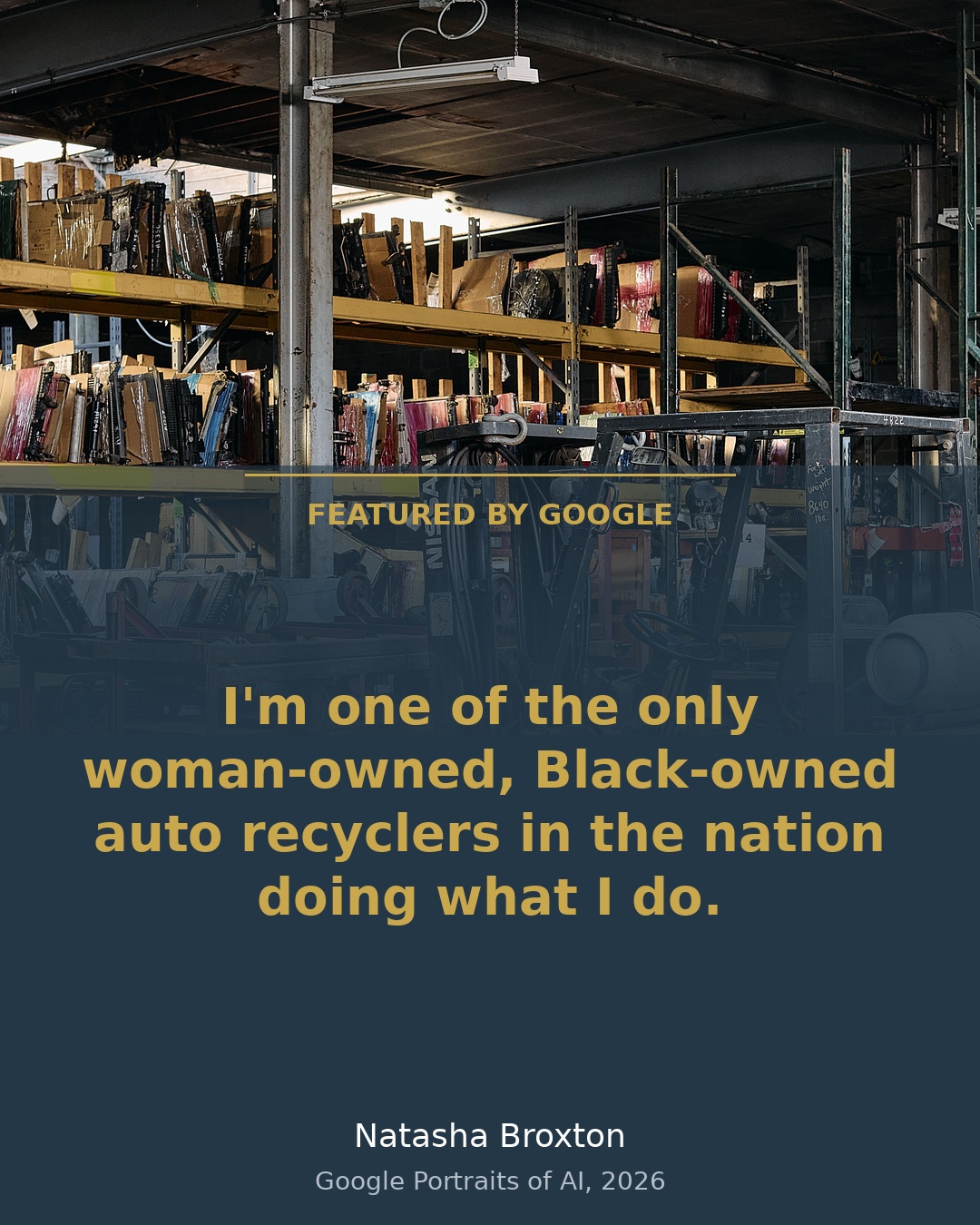
Google came to Milwaukee to document how AI works inside a real American business. They did not come to a tech startup. They came to a 125,000-square-foot auto recycling facility on the city's northwest side.
Select Auto Parts and Sales has been operating for 14 years. It is a Black woman-owned business that processes thousands of vehicles a year, sells used parts across the region, and runs a tire shop serving local drivers. It does not look like a technology company. It operates like one.
Why Google Came
Google's Portraits of AI Across America series features businesses that are integrating AI into daily operations, not experimenting with it on the side. The team selected Select Auto Parts to represent Wisconsin because the AI work happening there is not theoretical. It is in the workflow.
SOPs that used to take weeks to build by hand now take hours. Gemini drafts the structure. The operator refines it. NotebookLM captures the institutional knowledge that lives in people's heads and makes it searchable for the entire team. These are not pilot programs. They are how the business runs.
The Numbers That Matter
The results are measured, not projected. Sixty to seventy percent of administrative time has been recovered. Revenue is up thirty percent. Time that used to disappear into manual documentation, data entry, and repetitive tasks now goes back into customer relationships, inventory decisions, and growth.
This is not about replacing people. It is about giving the people who run the business their time back. When an operator gets twenty hours a week back, they do not fill it with busywork. They find revenue they did not have time to chase before.
The Knowledge Problem Most Businesses Ignore
Every business has a knowledge problem. The people who know how things work carry that knowledge in their heads. When they leave, retire, or move on, the knowledge leaves with them. Most operators accept this as the cost of running a business. It does not have to be.
At Select Auto Parts, the institutional knowledge that used to live with a few key people is now captured and searchable. A new team member can ask a question in plain language and get an answer drawn from the business's own documents, processes, and history. Training time drops. Dependency on any single person drops. The business becomes more resilient without adding headcount.
The Operator Mindset
The businesses that get real results from AI share a common approach. They do not treat AI as a tool they buy and hand to a team. They treat it as a change in how work gets done. The operator is involved. The operator decides what to integrate, what to reject, and what to refine. AI does not run the business. The operator does, with better tools.
The businesses that struggle are the ones looking for a button to press. AI does not work that way. It requires judgment, sequence, and an operator who knows their business well enough to know where AI fits and where it does not.
What This Means for Your Business
If a 14-year-old auto recycling facility in Milwaukee can recover sixty to seventy percent of its admin time and grow revenue thirty percent, the question is not whether AI works. The question is whether you are ready to integrate it into how work gets done in your business.
The operators who win with AI are the ones who start with their own workflows, not with a vendor's pitch deck. They look at where time is lost. They build from there.
Start With Your Own Roadmap
If you are an operator who wants to see what AI can do inside your business, start with a roadmap, not a shopping list. Identify where your time goes. Identify what knowledge is concentrated in too few people. Identify the workflows that slow you down. Then build from there.
Book a strategy session at alituragroup.com/strategy-session or download the AI Roadmap at alituragroup.com.
Natasha Broxton is the founder of Alitura Group and the owner of Select Auto Parts and Sales in Milwaukee, Wisconsin. She was selected by Google to represent Wisconsin in the Portraits of AI Across America series.