AI Is Reaching America's Blue Collar Industries but Small Businesses Risk Falling Behind
September 28, 2026 | 6 min read
AI Is Reaching America's Blue Collar Industries but Small Businesses Risk Falling Behind
September 28, 2026 | 6 min read
Artificial intelligence is moving beyond technology companies and corporate offices. It is showing up in warehouses, repair shops, manufacturing floors, logistics operations, and recycling businesses. The places where work gets done with hands, tools, and experience.
But as AI becomes a more common part of everyday business operations, new federal data suggests that smaller companies may be at risk of falling behind larger firms.
The question is larger than technology adoption. If AI becomes a competitive advantage available primarily to large corporations, small manufacturers, recyclers, repair businesses, contractors, and suppliers could lose ground without realizing it.
What the Census Data Shows
The U.S. Census Bureau found that reported AI use varies substantially by firm size. Larger firms are adopting AI at nearly twice the rate of the smallest businesses. That gap matters because AI is becoming business infrastructure, not a luxury.
The Department of Labor has also recognized this shift. The AI in Registered Apprenticeship Innovation Portal signals that federal workforce policy is beginning to treat AI literacy as a core workplace skill, not a specialized technical competency.
What Practical AI Looks Like Inside a Real Business
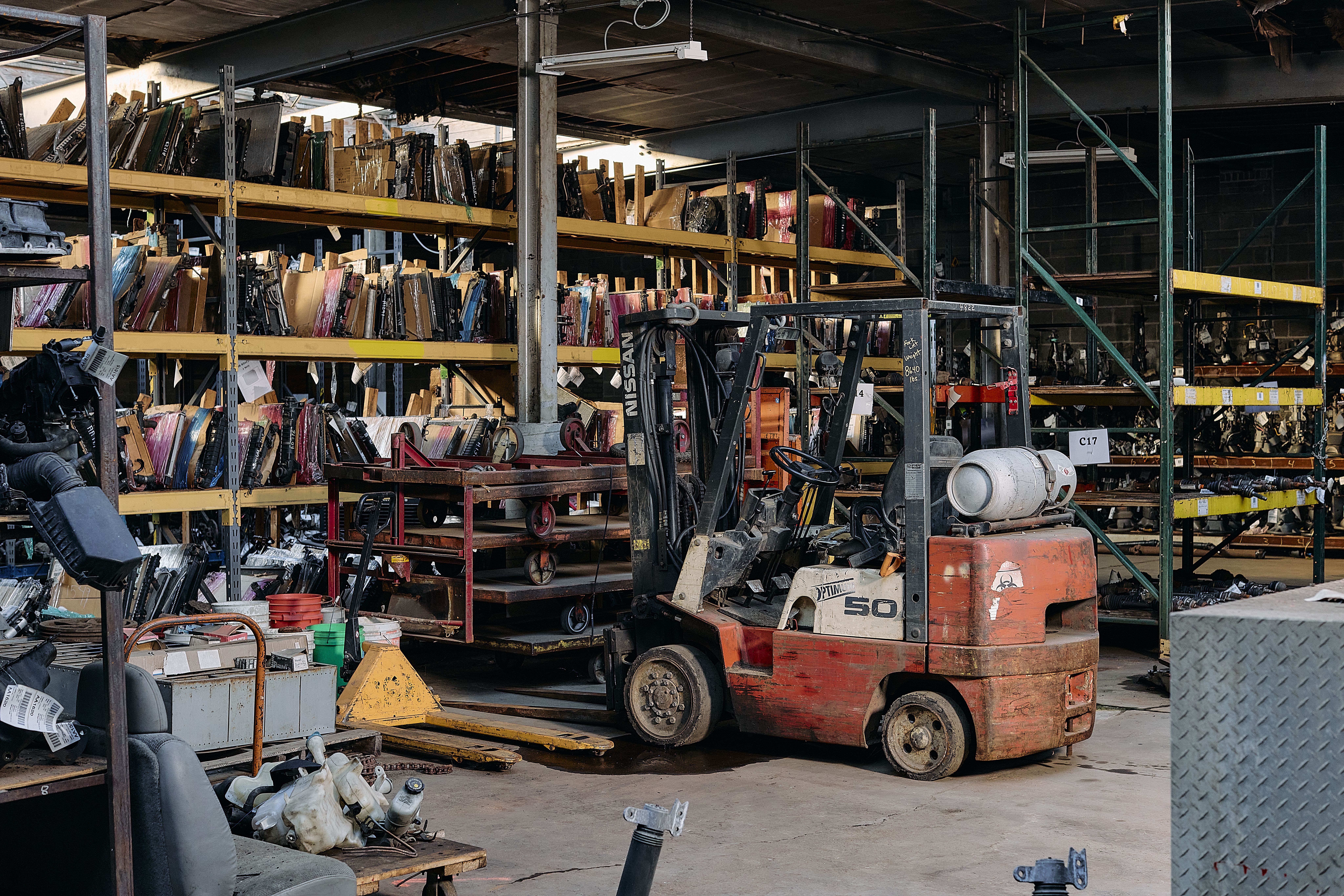
I run a 125,000 square foot automotive recycling facility in Milwaukee. We handle inventory, customer intake, parts pricing, tire sales, and a phone that never stops. Fourteen years of operations built on relationships, experience, and institutional knowledge.
When I started using AI inside this business, I did not buy enterprise software or hire a data team. I started with the tasks that were eating my time. Customer questions. Inventory organization. Grant writing. Email follow up. Market research.
The result was not a transformation. It was a recovery. AI gave me back 60 to 70 percent of my admin time. It helped drive a 30 percent revenue increase. Not because AI replaced the work. Because it organized the work so I could focus on the parts that require a human operator.
The next chapter of AI will not only be written in Silicon Valley. It will also be written inside warehouses and family owned businesses across America.
Why Blue Collar Businesses Cannot Wait
Blue collar and operational businesses support local jobs, transportation, repairs, recycling, and essential services. Their ability to adopt AI will affect productivity, job quality, service access, and whether smaller operators can remain competitive.
The businesses that keep communities moving are the ones with the least time to research AI tools. They are running. They are serving customers. They are managing cash flow. They cannot pause operations to figure out which AI tool to try.
That is exactly why practical adoption matters. Not theory. Not platform comparisons. Not vendor demos. Real implementation inside real operations, tested against real problems.
Where to Start
If you run an operational business and have not started with AI, start where the money is leaking. Not with tools. With problems.
What task eats the most time without generating revenue? What question do customers ask that you answer the same way every time? What record do you wish you could find in 30 seconds instead of 30 minutes?
Those are your AI starting points. Not a strategy document. Not a technology roadmap. The friction in your daily operation.
AI is reaching blue collar industries whether the businesses in them are ready or not. The owners who start now will have a head start. The ones who wait will be answering to competitors who did not.
Find out where your business stands with AI
Answer 10 questions about your operations and get a personalized AI Starter Roadmap with quick wins and a 4 week action plan.
Take the Free AI Roadmap AssessmentAlitura Group | AI Consulting, Training, and Speaking
Natasha Broxton is an award winning CEO, entrepreneur, speaker, and AI consultant based in Milwaukee, Wisconsin. She is the founder and CEO of Select Auto Parts and Sales, a 125,000 square foot automotive recycling facility, and founder of Alitura Group, providing AI consulting and training for small business owners.
Alitura Group | Operator led AI modernization and systems strategy | alituragroup.com