
I Did Not Learn AI in a Classroom.
I built it because the operation needed better systems. No tech background. No engineering team. Just a 14-year operator who was tired of holding every piece together alone.
The Work Spoke for Itself.
I did not chase recognition. I built systems, posted about what worked, and the recognition found me.

Google Portraits of AI Across America
Featured for real-world AI implementation inside an operating automotive recycling business with a 125,000 sq ft facility.
Tory Burch Foundation Fellow
Selected as a Tory Burch Foundation Fellow, part of a program supporting women entrepreneurs.
U.S. Chamber CO-100 Honoree
Named a U.S. Chamber of Commerce CO-100 honoree.
Goldman Sachs 10,000 Small Businesses
Graduate of the program, applying the growth framework to scale operations and systems inside a real business.
Verizon Small Business Digital Ready
Panel speaker for Verizon's small business digital readiness program.
WWBIC Small Business Academy
Speaker and instructor for the Wisconsin Women's Business Initiative Corporation.
U.S. Black Chambers Small Business of the Year
Select Auto Parts and Sales named 2026 Small Business of the Year by the U.S. Black Chambers.
V-List Visionary of the Year
Named Visionary of the Year by the V-List, 2026.
ARA Awareness Committee
Serving on the Awareness Committee of the Automotive Recyclers Association, the national trade association for the automotive recycling industry.
Nobody Was Teaching What I Actually Needed.
I had been implementing AI inside my business for three years because I saw how valuable it was. The things I was building were literally saving my business. So any training I could get my hands on, I took.
But I noticed a gap in AI education for business owners. Much of the training I found focused on creating images, writing captions, or answering emails. Those can be useful starting points, but I needed something deeper: systems that could support employees and solve real operational problems.
Nobody was teaching AI implementation for business owners at the level I needed. Not in a lab. Not in a slideshow. Inside a business with phones ringing, inventory moving, pricing pressure, and a team that needs consistent answers.
I was already using AI and it was already working. But I struggled to find training that met me where I was. That gap is why I started Alitura Group.
Real Problems. Real Solutions. Inside a Real Business.
I needed a remote sales team but could not afford to hire one in person. So I built voice AI to handle inbound calls and vehicle evaluations. That was the first system.
Vehicle evaluation time was eating hours every day. I built tools to cut that down, turning a process that required my personal knowledge into something anyone on the team could execute.
I took 14 years of industry knowledge and built it into custom tools so someone with zero automotive experience could operate at my level. Pricing. Quoting. Intake. Call handling. Decision support.
Every system I teach was tested inside my own operation first. The yard is the proof.

One Local Class. One Hashtag. One Call From Google.
I taught my first class ever locally in Milwaukee. I posted about it. Google found that post through a hashtag search.
That led to national recognition in their Portraits of AI Across America series. Google featured my work not because I was an influencer or a consultant with a framework. They featured me because I was an operator who actually built AI inside a real business.
That recognition is what turned into Alitura Group. Not a pivot. Not a rebrand. A response to what business owners kept asking me: how do I actually do this inside my business?
A Tire Cleanup Job Became a 125,000 Sq Ft Business.
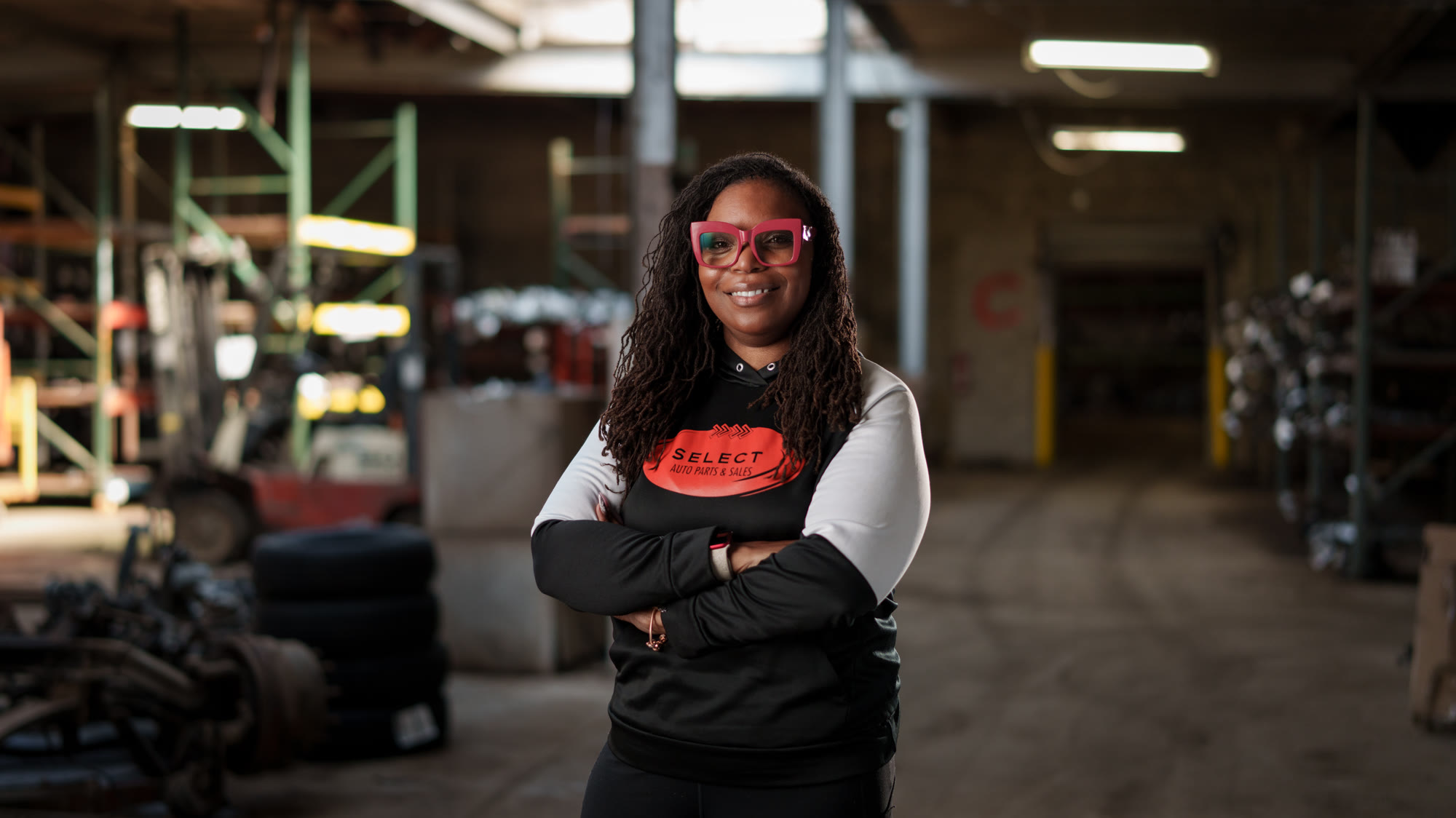
Fourteen years ago, my husband and I were operating in the tire recycling industry, working alongside automotive businesses across the region. We were hired to clean out a large facility filled with discarded tires.
We saw more than a cleanup project. We saw an opportunity and acquired the building. My husband suggested converting it into an indoor automotive recycling operation. I led the execution: licensing, permits, staffing, operating systems, and the daily work of turning a tire-filled warehouse into a functioning yard.
That became Select Auto Parts and Sales. Over the years, I developed systems around pricing, call handling, inventory, purchasing, and decision-making because the business needed more structure. Too much lived in my head. Too much depended on who was working that day.
That operator-built work became the foundation for everything I teach through Alitura Group.
Spot It. Structure It. Support It.
We do not start with tools. We start where the money is leaking. That is not a slogan. It is the order I followed inside my own business, and it is what makes this work practical: defining the operational problem before choosing the technology.
Spot It
Identify where the money is leaking. Time, revenue, opportunity, consistency. Before you touch a single tool, you have to know where the problem lives.
Structure It
Design the system or AI workflow around the problem. A Strategy Session delivers the diagnosis and roadmap; implementation is a separately scoped service.
Support It
Train the team. Maintain the system. Sustain the implementation. AI that nobody uses or maintains is just expensive software sitting on a shelf.
See Her On Stage.
Watch highlights from Natasha's keynotes, panels, and practical AI training. Planning an event or organizational workshop? Explore speaking topics and request availability.
Bring Practical AI to Your Next Stage or Team.
Planning a keynote, workshop, or company training? Request speaking availability. Business owners looking for a specific systems plan can also book a Strategy Session.